


Innovation in life sciences is increasingly shaped by the need to make healthcare not only more effective but more sustainable. As the industry looks for ways to reduce environmental impact while meeting growing global demand for medicines, precision fermentation is emerging as a transformative technology. Once largely associated with food innovation, the approach is now gaining significant momentum in biopharmaceuticals, diagnostics and advanced therapeutics.
How does it work?
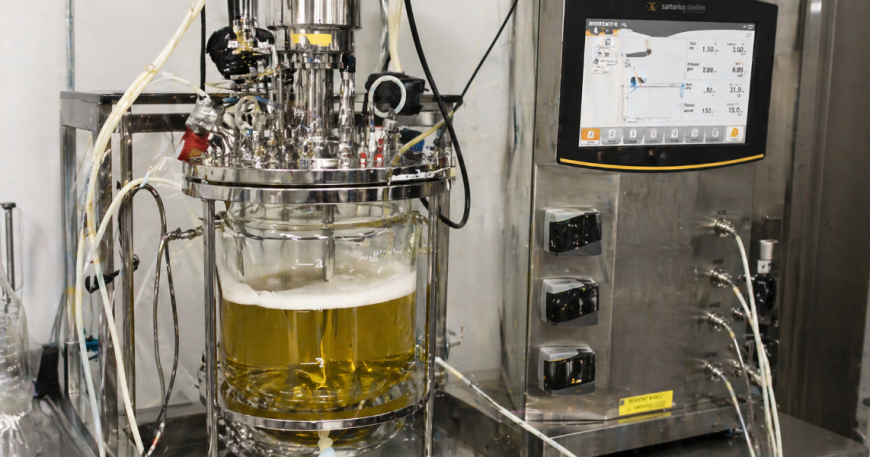
Precision fermentation uses microorganisms such as yeast, fungi or bacteria as biological factories, programming them to produce specific proteins, enzymes or other complex molecules. By inserting carefully designed DNA sequences, scientists can direct microbes to manufacture substances that have traditionally relied on animal sources, chemical synthesis or resource-intensive industrial processes. The result is a method of production that can be highly scalable, precise and potentially far more sustainable.
Why it’s important.
In healthcare, one of the most promising applications lies in biopharmaceutical manufacturing. Proteins used in therapies, including insulin, monoclonal antibodies and growth factors, have often required complex and costly production methods. Precision fermentation offers a route to produce these molecules more efficiently while maintaining consistency and purity. This could support a more resilient supply chain for essential medicines, while also helping to reduce manufacturing emissions and waste.
Attracting lots of attention
The technology is also attracting attention in vaccine development. Fermentation-based systems can support rapid production of vaccine components, offering flexibility that could prove critical in responding to emerging diseases or future pandemics. The scalability of microbial production has led many in the sector to see precision fermentation as part of a broader strategy for strengthening health security.
Opening new opportunities
Beyond medicines, the approach is opening opportunities in biomaterials for healthcare. Researchers are using precision fermentation to develop sustainable alternatives for materials used in wound care, tissue engineering and medical devices. From recombinant collagen to novel biodegradable polymers, these innovations could reduce reliance on animal-derived products and traditional plastics while maintaining performance in clinical settings.
International Reaction
According to World Health Organization Director-General Tedros Adhanom Ghebreyesus, “Health systems must be both resilient and sustainable if they are to meet the challenges of the future.” That principle increasingly resonates across biotechnology, where innovation is being judged not only by clinical outcomes but by its wider environmental and social impact.
Investment in the field is growing rapidly. Biotech companies, pharmaceutical manufacturers and research institutions are exploring how fermentation platforms can be integrated into commercial production at scale. Interest is also expanding among policymakers focused on advanced manufacturing and green industrial strategy. In regions with strong life sciences clusters, this presents opportunities for collaboration spanning synthetic biology, engineering and healthcare innovation.
Challenges remain
Challenges remain, particularly around scale-up, regulatory pathways and infrastructure. Moving from laboratory success to commercial manufacturing requires significant expertise and investment. Regulatory frameworks must also continue evolving to assess products created through new biological production methods. Yet many believe these are the kinds of challenges that accompany any emerging platform technology with disruptive potential.
A second important dimension is affordability. If precision fermentation can lower the cost of producing complex biologics, it could play a role in improving global access to advanced therapies. That possibility has generated interest well beyond high-income markets, especially where sustainable and decentralised manufacturing could support healthcare delivery in underserved regions.
As Jennifer Doudna has said, “Biology is becoming a design technology.” That idea captures much of what makes precision fermentation so significant. It is not simply about producing molecules differently but about rethinking how healthcare products can be designed, manufactured and delivered in ways aligned with both innovation and sustainability.
As the life sciences sector continues to balance scientific progress with environmental responsibility, precision fermentation may become an increasingly important part of the solution. From pharmaceuticals and vaccines to biomaterials and diagnostics, its potential reaches across the healthcare ecosystem. What began as a promising platform in synthetic biology is now positioning itself as a serious driver of the future of sustainable healthcare.

